Home › Services
The hole is where the failure surfaced, not where it began
Filling a pothole and repairing one are two different purchases, and on most lots in this county only the first one ever gets bought. That is why the same holes are on the work order every March.
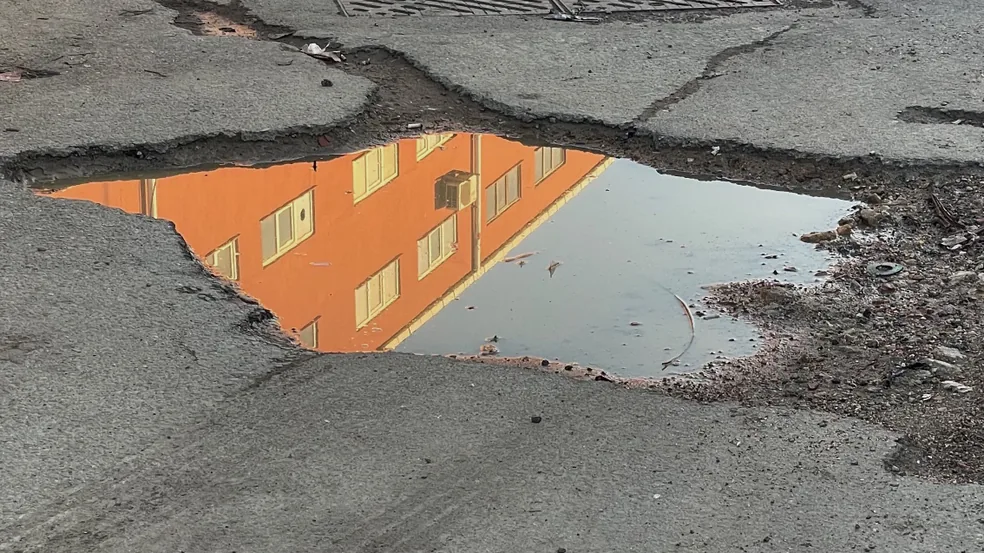
Run the sequence backwards and the repair decision writes itself
A pothole has a history, and every step of it happened before anyone noticed a hole. Laid out in order, the sequence explains why filling the visible opening changes nothing about whether it comes back.
- Autumn. Something on the surface is open. A crack that widened over the summer, a seam where an old patch meets the pavement it was cut into, an edge where a casting sits proud of the asphalt, a spot where raveling has opened the texture. It is small and it looks like nothing.
- Late autumn into early winter. Rain and meltwater run across the surface and go down through that opening. They do not stop at the asphalt. They reach the compacted aggregate underneath and spread sideways through it, because lake-plain clay and glacial till below the aggregate do not take water away quickly.
- Every crossing of the freezing point. The trapped water expands as it freezes, pushing aggregate particles apart and levering the opening above a little wider. It thaws, the disturbed stone resettles into a looser arrangement than it held before, and slightly more water gets in on the next pass. The count of these crossings across a Northeast Ohio winter is what does the work, not how cold any single night gets.
- Through the thaw cycles. Loosened base material turns to slurry under a wheel load and gets pumped out through the opening, or washed along under the pavement to somewhere else. You can sometimes see the evidence as a fan of fine grit around a crack after a thaw.
- The void. Now there is a pocket of empty or nearly empty space under an intact-looking surface. Nothing about the lot looks wrong yet. Walk it in February and you will not find this.
- The breakthrough. A loaded axle crosses the unsupported span and the asphalt, which has almost no strength in tension and none at all with nothing beneath it, fractures and drops in. That is the first day anybody sees a pothole. It is also the last event in a chain that ran for months.
- Enlargement. From that moment the hole grows daily. Every tyre that drops into it strikes the far wall as it comes out, breaking more material off the rim, and the exposed base washes out faster with every rain. A hole left through a busy spring does not stay the size it was found at.
The useful consequence: the defect that needs repairing is the void and whatever put water into it. The opening in the asphalt is the symptom that finally became visible. Any method that addresses only the visible part is committing to do the same work again.
Cold patch, assessed honestly
Cold patch is a stockpile mix that stays workable at low temperatures. It can be shovelled into a hole in January, tamped down, and driven on immediately. It has an entirely legitimate place on a commercial property and it is regularly sold as something it is not.
What it genuinely buys you is this. It takes an open hole out of service as a trip hazard and as a wheel strike. It slows the daily enlargement, because tyres stop hitting the broken rim. It lets a lot keep operating through the months when proper repair is not available. On an occupied site in February those are real values and they are worth paying for.
What it does not do is put back the base material that went missing. It sits in the void as loose aggregate coated with a binder that never cures hard, resting on saturated or frozen ground. As soon as the thaw arrives and traffic resumes, the material ravels at its edges, gets picked up by a plough blade or a turning tyre, and works its way out. Often it goes in a single afternoon.
That is not a workmanship failure and it should not be treated as one. A cold patch that lasted from January to April did the whole of the job it was capable of doing. The mistake is in the accounting, not in the material: if it goes on the books as a repair, the lot appears to have been fixed several times while its actual condition has only got worse. Record it as temporary work and the budget tells the truth.
Hot mix, infrared and full depth: preconditions and honest limits
Three methods get proposed for the same hole, they cost very different amounts, and each one restores a different part of the pavement. Choosing between them is a question about what is underneath, not about what is on top.
Hot mix patching
The area is saw cut or milled back to clean, square, vertical faces, all loose and broken material is removed, the exposed faces are coated with a tack material so the new asphalt adheres to the old, then hot mix is placed and compacted, usually in more than one lift if the depth calls for it.
Preconditions: the mix has to be available, which in this region means the plants are running and the season is open, and the excavation has to be dry and free of standing water and ice. A hot mix patch laid into a wet hole in November is buying a fraction of what it should.
What it restores: a sound, dense, properly compacted wearing surface over whatever it was placed on. If the failed material was removed and replaced down through the base, this is a full-depth repair by another name. If only the asphalt was replaced and the void underneath was filled with more asphalt, it is a heavy surface patch sitting on the same weak ground.
Infrared restoration
A panel heats the existing asphalt in place until the top couple of inches are workable. The softened material is raked and loosened, fresh mix and a rejuvenating agent are worked into it, the area is levelled, and the whole panel is compacted while hot. Done well, it leaves no cold joint at the perimeter, because the repair and the surrounding pavement are fused while both are soft.
Preconditions: the defect has to live in the top layer. The base below has to be sound and dry. The existing asphalt has to still hold enough binder to soften and knit rather than simply scorch, which rules out badly oxidised and heavily raveled surfaces. Oil-contaminated asphalt is a poor candidate, and so is any area where the hole goes deeper than the heat reaches.
The honest limit of the middle option: infrared repairs the surface beautifully and does nothing at all about a void. On a pothole that formed the way the sequence above describes, the base has already lost material, and reheating the asphalt over the top of that loss produces a smooth, seamless, correctly textured patch with the same hollow underneath it. It is the right method for a surface defect, a sunken patch edge, a rough seam, a fuel-softened spot on sound ground. It is the wrong method for a structural one, and it is frequently sold for the second because it presents so well on the day.
Full-depth replacement
The perimeter is cut, every bit of asphalt comes out, and digging carries on below it until sound, compactable material is reached. Failed aggregate is removed. New aggregate goes in and is compacted in controlled layers. Asphalt is then placed in lifts and compacted to match the surrounding grade.
Preconditions: an open season, a dry excavation, and enough site access to get a truck and a roller into the area. On an occupied lot it also needs a phasing plan, because the section is out of service until it can take load.
What it restores: the load path. Of the three methods, it alone puts the missing structure back, which is why it alone ends the cycle at a hole that has been repaired before. It costs several times what a surface patch of the same footprint costs, and it is the cheaper option on a three-year view wherever the base is the problem.
The repair has to be cut wider than the hole you can see
The void does not have the same outline as the opening. It is nearly always larger, because the surface bridged across the weak area until it could not, and it gave way at the weakest point rather than at the edge of the damage. Asphalt around the rim is also fractured for some distance back from the break, in ways that are invisible until the saw goes through it.
So the cut is taken back to material that is genuinely sound, squared up into a rectangle aligned with traffic flow where possible, and the faces are left vertical. Undercut or feathered edges are the problem, because a tapered edge means the new material runs out to nothing at the perimeter, and a knife edge of asphalt cannot be compacted and cannot carry a wheel.
What happens when the footprint is too small is consistent enough to be diagnostic. The patch itself stays intact while a new crack opens in a ring around it, a few inches out, following the line where fractured pavement was left in place. Water then enters at that ring rather than at the original hole, the base loses more material, and a year later the patch is sitting proud on a pedestal with fresh failure all around its perimeter. The repair worked. The boundary was drawn in the wrong place.
A square, vertical, properly compacted edge also matters for the plough. A patch that sits even slightly high, or whose perimeter is ragged, gives a blade something to catch, and a blade catching an edge every storm will pull a sound repair apart over one winter.
A hole that returns has told you something specific
Treat the second failure in the same footprint as a test result rather than as poor work. A repair that was correctly made and then failed again has narrowed the possibilities considerably, and the information is worth more than the patch was.
What it is saying is that material keeps leaving from under that spot, which means water keeps arriving there and has nowhere to drain to. The questions that end the cycle are short and none of them are about asphalt.
- Where does surface water travel on its way to this point, and where is it meant to go once it gets there?
- Is there a catch basin nearby, is it clear, and does the grade actually fall towards it or away from it?
- Does water stand anywhere within sight of the spot after rain, and how long does it take to go?
- Where does ploughed snow get stockpiled, and does the meltwater from that pile run across or into this area from December through March?
- Is there a casting, a curb line, a joint or a utility trench within a few feet of it, and is there an open edge there that has never been sealed?
- When the repair was last made, was the base excavated and replaced, or was the asphalt alone taken out and made up with more asphalt?
That last question separates two very different histories that look identical on an invoice. A patch that has been replaced twice without anybody going below the asphalt has not been tested yet, because the same experiment has been run twice. Answer the drainage questions first, then repair full depth, and the spot generally stops appearing on the list.
Exposure is the reason the calendar matters
A pothole in a drive aisle is a pavement problem. A pothole in a pedestrian route, at the foot of a kerb ramp, beside a dock, or in a row where people step out of vehicles is a different category of problem, and the difference is worth thinking about in general terms before deciding how long something waits.
Two kinds of exposure follow an open hole on a commercial property. One is a person losing their footing on an uneven surface, which tends to happen where people are walking rather than driving and is worse when the opening is full of water or covered by snow and cannot be seen. The other is damage to vehicles, which produces complaints from tenants, customers and delivery operators, and which is easy to attribute to a specific location.
None of that changes what the pavement needs. What it changes is the order of the queue. A hole in a back corner that nothing crosses can wait for the season to open. A hole where people walk usually cannot, which is precisely the situation where a temporary measure earns its keep: barricade it, cold patch it, and get it on the spring programme as a full-depth repair rather than leaving it to a fill that will be gone by April.
Winter triage, and how to sequence the spring so the same holes do not return
Between roughly December and the reopening of the hot mix season, the set of things that can actually be done is small. Knowing which is which stops money being spent on work that cannot succeed in the conditions.
Worth doing in the cold months
- Barricade or cone anything that presents a hazard to people on foot, and keep those barriers in place and upright through the season rather than replacing them after each storm.
- Cold patch the openings that are taking wheel strikes, and accept that this is temporary work bought to control enlargement and exposure.
- Keep catch basin grates and drainage inlets clear of ice, slush and debris, because water that cannot get into a drain goes into the pavement instead.
- Move the snow stockpile. If the same corner receives every pile from December through March, it takes a full winter of saturation and refreezing that no other part of the lot experiences, and relocating the pile costs nothing.
- Photograph everything while it is at its worst. Late winter is when the lot tells the truth, and the pictures taken then are what make the spring scope accurate.
Work that has to wait
- Any hot mix patching, because the material has to be placed and compacted in a temperature window that a Northeast Ohio winter does not provide.
- Full-depth repair, because the excavation cannot be made properly in frozen or saturated ground and aggregate cannot be compacted to a useful density in those conditions.
- Crack sealing and surface treatment, which need a dry, clean, warm enough surface.
- Grading and drainage correction, which need workable soil.
Sequencing the spring is where the previous winter either gets undone or gets repeated. Start with the drainage answers, because every repair downstream of standing water is being placed into the conditions that created the hole. Then take the repeat failures full depth, in the order of how much traffic crosses them, before touching any hole that has appeared for the first time. Then handle the new single-season holes, most of which are genuinely surface events and can be dealt with more cheaply. Leave crack sealing to the same programme but schedule it deliberately for later in the year, so that the lot goes into the following winter closed up rather than opened up.
The reason to book early rather than late is the calendar itself. The season is short here, it closes in the autumn, and work deferred past the close does not simply happen a few months later. It happens after another winter has run the entire sequence again on the same defect.
Photograph it, log it, and let the pattern become visible
Most commercial properties have no record of pavement repair beyond a stack of invoices, and an invoice cannot tell you whether a hole is new or is the fourth appearance of the same failure. A simple log solves that, and it is the cheapest diagnostic tool available on a lot.
Photograph each defect from the same vantage point each time, with something of known size in the frame for scale, and take a second shot from further back that shows the surrounding area and the grade. Date every image. Photograph the same spots after heavy rain and again during a thaw, because those are the conditions that show where water travels, and neither one is visible on a dry afternoon in July.
Log each repair against a location on a simple plan of the lot: what the defect was, what method was used, whether the base was opened up, when it was done, and when it failed if it did. Note the date the surface was last treated and note where snow was stockpiled that winter.
Across two or three seasons this turns an argument into a map. The spots that recur cluster, and the clusters sit downhill of something, next to something, or under the place the plough pushes the snow. At that point the next conversation is about grade and drainage rather than about asphalt, which is the conversation that actually ends the recurrence. It also makes bids comparable, because every contractor is looking at the same documented history instead of at whatever the lot happens to look like on the morning they visited.
The hole is where the failure surfaced, not where it began — common questions
The hole is small. Can it wait until next year?
A hole in a lot in Greater Cleveland does not hold its size. Traffic breaks material off the rim every day it stays open, and water pours straight into the base through it. A small opening in April is routinely three or four times the area by the following spring, and the repair is priced on the area that has to come out. Where it sits also matters, because an opening on a walking route is a different urgency from one in a corner nothing crosses.
Why did the patch we paid for last year fail again in the same place?
Almost always because the repair replaced asphalt and the problem was underneath the asphalt. If the base was not excavated and rebuilt, the void that caused the original collapse is still there and it keeps growing. The other common cause is a cut that was taken only to the edge of the visible hole, leaving fractured pavement in place around it. Ask what depth the previous repair went to before assuming the work was poor.
Is infrared repair a cheaper alternative to a full-depth patch?
They are not alternatives, because they repair different things. Infrared reworks the top couple of inches of existing asphalt and leaves a seamless joint, which is excellent for a surface defect on sound ground. It cannot replace base material it never reaches. On a pothole that formed by base loss, infrared gives you a very good looking surface over the same void, and the failure returns on its original schedule.
Our lot gets a dozen new holes every March. Is the asphalt just worn out?
Possibly, but check the distribution before concluding that. If the holes cluster along one edge, around a drain, in the corner where snow gets piled, or in one drive aisle, the pattern points at water and at load rather than at age. Scattered evenly across the whole surface with wide interconnected cracking between them is a different picture, and that one does point towards the lot having reached the end of its structural life.
Can anything useful be done in January and February?
Yes, though none of it is permanent. Hazards can be barricaded, openings can be cold patched to stop them enlarging and to control exposure, drainage inlets can be kept clear of ice so meltwater has somewhere to go, and the snow stockpile can be moved off the area that keeps failing. The most valuable winter task is photographing everything at its worst, because that is what makes the spring scope accurate.
What should a proposal for pothole repair actually specify?
The number of locations and the square footage of each, the depth of excavation at each one, whether base aggregate is being replaced and to what depth, the asphalt thickness and the number of lifts, and how the perimeter is being cut. A proposal that quotes a rate per hole is pricing an unknown, because two holes of the same diameter can differ by an order of magnitude in what has to come out below them.
Does a repair need to extend past the edge of the hole, and how far?
Yes, always. The void underneath is wider than the opening, and the asphalt around the rim is fractured further back than it looks. The cut goes to material that is genuinely sound, squared up with vertical faces. When it is drawn too tight, the patch survives while a ring of new cracking opens a few inches outside it, which is the same failure arriving by a slightly different route.
We keep a stack of invoices. Is a photo log really worth the effort?
It is the cheapest thing on this page and it changes decisions. Invoices record what was purchased; they cannot tell you that one location has been repaired four times. Dated photographs from a fixed vantage point, taken after rain and during a thaw, plus a note of the method and depth used each time, turn scattered complaints into a map of where water goes. That map is what moves the spending from patching to the cause.
Talk through your site
Start with the address, roughly how many square feet, and photographs of the worst areas and anywhere water sits after rain.
Related work
Parking Lot Paving
New lots and full reconstruction, from subgrade up.
Parking Lot Repair
Rebuilding the failed areas without closing the whole site.
Asphalt Repair
Patching, full-depth repair and what each failure says about the base.
Sealcoating & Crack Sealing
Surface protection, crack sealing, and the limits of both.